
Introduction
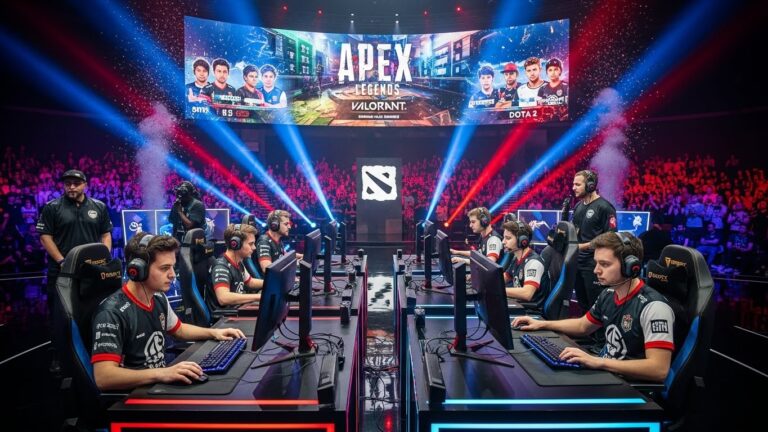
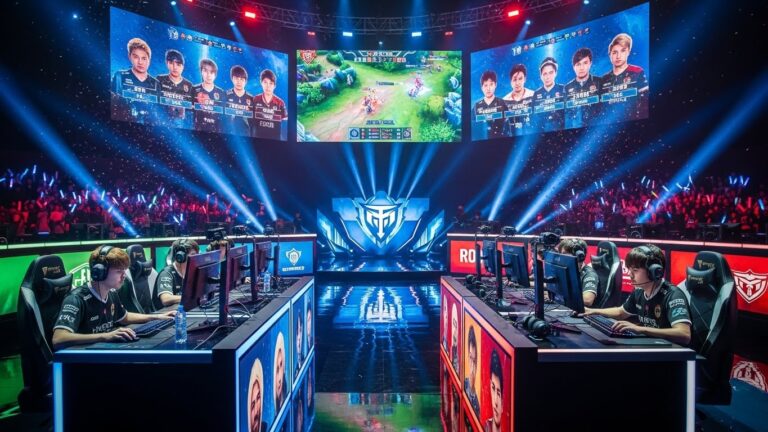
Esports has grown faster than almost any other entertainment industry in the last two decades. But what lies ahead? As technology advances, new generations of gamers join the scene, and global interest continues to rise, the future of esports looks even brighter. In this blog, we’ll explore the emerging trends, technologies, and predictions that will shape esports over the next 10 years.
Trend 1: Mobile Esports on the Rise
While PC and console titles dominate in the West, mobile esports are exploding worldwide. Games like PUBG Mobile, Free Fire, and Mobile Legends attract massive audiences in Asia, South America, and Africa. With smartphones becoming more affordable, mobile gaming is democratizing esports by making it accessible to millions who don’t own high-end PCs.
Prediction: Mobile esports will surpass PC esports in viewership by 2030, particularly in developing regions.
Trend 2: Integration with the Metaverse
The concept of the metaverse—a shared virtual space where people interact, work, and play—has massive implications for esports. Instead of watching tournaments on flat screens, fans may soon enter virtual arenas, walk among other spectators, and even interact with players in 3D environments.
Prediction: Esports will become one of the main attractions of the metaverse, blending gaming, VR, and social experiences.
Trend 3: Artificial Intelligence in Esports
AI is transforming how teams train and strategize. Advanced analytics tools track player performance, analyze opponents’ tactics, and recommend improvements. AI is also being used to create smarter in-game opponents for practice.
Prediction: By 2030, every professional team will have AI-powered performance coaches, just like traditional sports have data analysts.
Trend 4: Esports in Traditional Sports Infrastructure
Esports is being embraced by traditional sports organizations. Football clubs like Paris Saint-Germain, FC Barcelona, and Manchester City already own esports teams. Stadiums are being repurposed to host gaming tournaments.
Prediction: In the future, esports and traditional sports will exist side by side, with shared facilities, training programs, and sponsorships.
Trend 5: Health and Wellness for Pro Gamers
One of the criticisms of esports is its sedentary lifestyle. However, teams are investing in fitness, nutrition, and mental health programs to improve player performance and longevity. Just as athletes train their bodies, pro gamers are now training both mind and body.
Prediction: Esports academies will include mandatory fitness and mental health training alongside gaming practice.
Trend 6: More Female Participation
Historically, esports has been male-dominated, but that’s changing. Female players, streamers, and teams are gaining recognition. Organizations and sponsors are pushing for inclusivity, and women-focused tournaments are rising in popularity.
Prediction: The next decade will see mixed-gender professional leagues and more women leading esports organizations.
Trend 7: Blockchain and Esports
Blockchain technology and NFTs are being explored as new ways to monetize esports. From digital collectibles to decentralized tournament platforms, blockchain could empower both players and fans.
Prediction: Fans will own digital “shares” in teams, receive blockchain-based rewards, and trade esports-related NFTs.
Trend 8: Government Recognition and Support
Countries like China and South Korea already treat esports as an official sport, offering visas and support to professional players. Western nations are catching up, and esports could one day appear in the Olympic Games.
Prediction: By 2032, esports will be included as a medal event in the Olympics, legitimizing it further on the world stage.
Trend 9: Education and Esports Careers
As explored earlier, universities are embracing esports. In the future, esports education will expand, producing graduates in esports management, broadcasting, marketing, and production.
Prediction: Esports careers outside of playing—such as coaching, journalism, and event management—will rival traditional gaming jobs in demand.
Trend 10: Global Expansion and Localization
Esports has been dominated by Asia, Europe, and North America. However, emerging regions like Africa, the Middle East, and South America are rapidly joining the scene. Local leagues, sponsors, and fanbases are forming in these regions.
Prediction: By 2030, Africa and the Middle East will host world-class esports tournaments, expanding the industry’s global reach.
The Future of Esports Viewership
Streaming will evolve from 2D broadcasts to interactive experiences. Fans may be able to switch between player perspectives, view real-time stats, or even control camera angles. Interactive streaming will make esports viewing even more immersive.
The Challenges Ahead
Despite the bright future, esports faces challenges:
- Sustainability: Reliance on sponsorships must be balanced with other revenue streams.
- Cheating and integrity: As prize pools grow, so do risks of hacking or match-fixing.
- Player burnout: Longer careers will require better support systems.
- Accessibility: Ensuring esports is inclusive for all communities.
Conclusion
The future of esports promises rapid innovation and expansion. From mobile dominance to metaverse integration, esports will look vastly different in the next decade. With AI-driven strategies, blockchain monetization, and global recognition, esports is on track to rival the biggest industries in the world.
About the Author