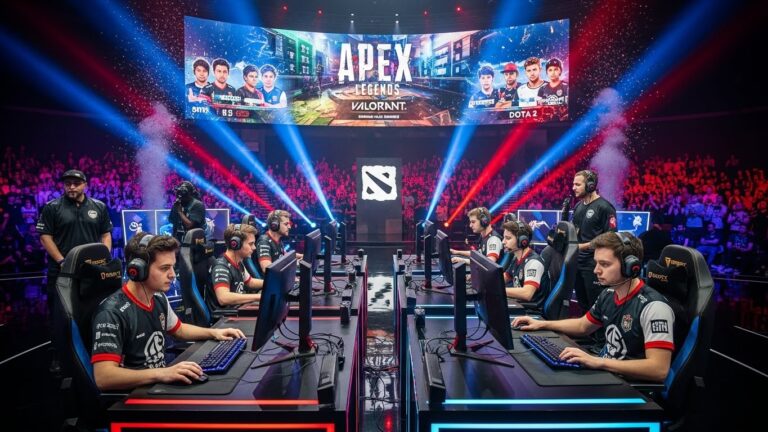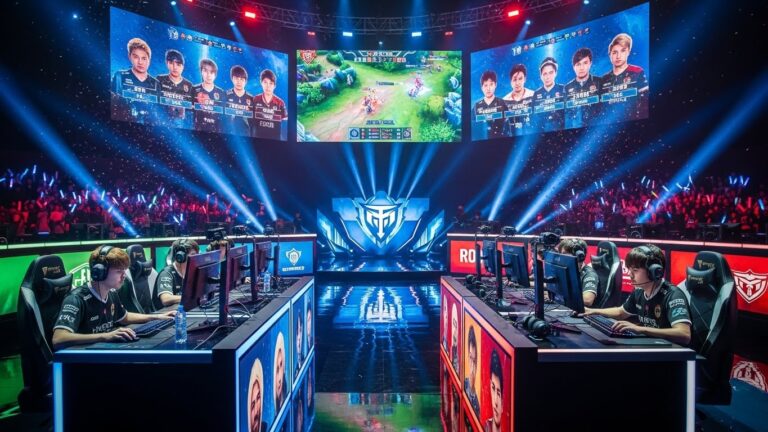

Esports and technology have always gone hand in hand. From the earliest days of competitive gaming to the billion-dollar tournaments we see today, every leap in hardware, software, and connectivity has transformed how esports are played, viewed, and experienced. Now, a new technological frontier looms on the horizon—quantum computing.
While it might sound like something out of a sci-fi movie, quantum computing is no longer a distant dream. It represents a fundamental shift in how we process information, and its influence could eventually extend to every corner of digital life—including esports. Although it’s still in its early stages, the potential of quantum computing to reshape data analysis, game design, strategy, and competitive fairness in esports is enormous.
In this blog, we’ll explore what quantum computing is, how it works, and how this revolutionary technology could transform the esports ecosystem—from gameplay optimization to AI-driven strategies and beyond.
Understanding Quantum Computing
To grasp how quantum computing could influence esports, we first need to understand what makes it different from traditional computing.
Conventional computers use bits—binary digits that represent either a 0 or a 1. Every calculation, every image, and every frame in a game is built upon combinations of these bits.
Quantum computers, however, use qubits, which can exist as 0, 1, or both simultaneously—a state known as superposition. Additionally, qubits can be entangled, meaning the state of one qubit is directly linked to another, even across vast distances.
This allows quantum computers to perform complex computations at unimaginable speeds, processing massive amounts of data in parallel rather than sequentially. In short, they can tackle problems that would take classical computers thousands of years to solve.
In the context of esports, this level of processing power could transform everything from player analytics to network infrastructure and even game design itself.
The Connection Between Quantum Computing and Esports
Esports relies on technology—powerful processors, high-speed internet, precise algorithms, and vast data analysis. As the scale of gaming grows, so does the demand for smarter systems capable of managing that complexity.
Quantum computing could bring revolutionary changes in areas such as:
- AI and Strategy Optimization
- Network Performance and Lag Reduction
- Game Balance and Fairness
- Player Health and Cognitive Tracking
- Real-Time Data Analytics
- Esports Betting and Anti-Cheating Systems
Let’s dive deeper into how each of these areas could be reshaped by quantum computing.
1. Smarter Game AI and Strategy Development
Artificial intelligence already plays a major role in esports—whether through AI-driven training bots, analytical tools, or match predictions. Quantum computing could supercharge this by allowing AI to process vastly more data and simulate millions of scenarios simultaneously.
Imagine an AI that can analyze every decision made in a competitive match across thousands of historical games in seconds. Quantum-enhanced AI could identify optimal strategies, predict opponents’ moves, and provide real-time insights to teams.
For players, this could mean personalized training programs powered by quantum analytics—tailored to their unique playstyle, reaction time, and performance trends.
For developers, it could mean creating in-game opponents that learn and adapt with human-like intelligence, offering more challenging and dynamic experiences.
2. Quantum Networking: The End of Lag
Lag is one of the most frustrating problems in online gaming. Even a delay of a few milliseconds can determine the outcome of an esports match.
Quantum networking, powered by quantum entanglement and quantum key distribution (QKD), could fundamentally change how data travels. Instead of relying on traditional digital signals, quantum networks transmit information using qubits—offering ultra-secure and near-instantaneous communication.
For esports, this could mean:
- Near-zero latency gaming environments.
- Seamless global tournaments with synchronized gameplay across continents.
- Stronger data security against hacks and DDoS attacks.
Quantum communication would make online matches as precise and responsive as local LAN tournaments, ensuring fairness and enhancing the overall competitive experience.
3. Perfect Game Balance and Simulation
Game balance is one of the toughest challenges in esports. Developers must constantly adjust character abilities, weapon stats, and mechanics to keep games fair and engaging.
With quantum computing, developers could simulate millions of combinations of game mechanics to identify imbalances before they even reach live servers. Quantum algorithms can process variables and player data far faster than classical systems, allowing developers to predict how small tweaks affect gameplay outcomes.
This could lead to perfectly balanced games, where no single character, weapon, or strategy dominates unfairly—something traditional computational models struggle to achieve.
Moreover, quantum simulations could predict how the esports meta (the dominant strategies) might evolve over time, helping developers and players stay ahead of competitive trends.
4. Enhanced Anti-Cheat and Integrity Systems
Esports integrity is a major concern. Cheating—through hacks, bots, or match-fixing—can damage a game’s reputation and competitive balance.
Quantum computing could provide next-level solutions for cheat detection. By analyzing enormous datasets from in-game behavior, reaction times, and movement patterns, quantum algorithms could identify subtle anomalies that traditional systems miss.
Quantum encryption could also secure communication between game servers and clients, making it nearly impossible for cheaters to intercept or manipulate data packets.
This would not only preserve fairness but also build greater trust among players, teams, and fans in the esports ecosystem.
5. Real-Time Data Analytics and Fan Experience
One of the most exciting areas of potential lies in real-time analytics. Esports fans love data—win rates, headshots, gold earned, APM (actions per minute), and more. Quantum computing could process live data streams from multiple players and teams simultaneously, providing deeper insights during matches.
Imagine watching an esports final where broadcasters deliver instant quantum-driven predictions:
- Win probabilities updated every second.
- Real-time strategy breakdowns.
- Dynamic heat maps showing the most active areas of gameplay.
Quantum-powered analytics could transform viewing experiences, turning spectators into participants who understand the complexity behind every move.
Teams could also leverage this technology to make mid-match adjustments, analyzing their opponents’ patterns as the game unfolds.
6. Quantum-Enhanced Player Training and Health Tracking
Top esports players train like athletes. They monitor reflexes, reaction times, mental focus, and physical well-being. Quantum computing could take performance tracking to an entirely new level.
By processing biometric and cognitive data, quantum systems could detect patterns in fatigue, stress, and concentration. This information could help coaches fine-tune training schedules or predict when a player might underperform.
Furthermore, wearable devices could collect real-time health data—heart rate, brain activity, or hand movements—and quantum-powered AI could use it to optimize player performance and longevity.
In the long run, this integration could help prevent burnout and injury, ensuring esports players maintain both physical and mental balance.
7. Quantum-Powered Esports Betting and Fair Play
Esports betting is a rapidly growing market, but it often struggles with transparency and fraud prevention. Quantum computing, combined with blockchain technology, could bring unprecedented fairness and verification to the process.
Quantum algorithms could instantly verify bets, analyze probabilities, and detect suspicious activities. Smart contracts could automatically process payouts based on verified results.
For fans, this would create a more trustworthy and secure betting environment. For regulators, it would provide a verifiable audit trail that reduces manipulation and corruption risks.
8. Revolutionizing Game Development
Game developers are always pushing boundaries—creating more realistic environments, advanced physics systems, and dynamic AI behaviors. Quantum computing could accelerate development by allowing studios to model complex systems that are impossible to simulate with traditional computers.
Imagine quantum-generated game worlds that evolve autonomously, learning from player behavior. Developers could run massive simulations to test every possible outcome, drastically reducing development time while increasing creativity.
This technology could also lead to new genres of games designed specifically around quantum mechanics—where probabilities, parallel outcomes, and unpredictability become core gameplay elements.
9. The Rise of Quantum Esports
As quantum computing becomes more mainstream, we might even see the birth of Quantum Esports—competitions and games built to harness quantum principles.
These could involve probabilistic mechanics, AI that evolves dynamically, or decision-making systems that challenge human intuition in entirely new ways. Players would need to think beyond linear logic, adapting to environments shaped by real-time quantum algorithms.
Just as VR and AR opened new possibilities for gaming, quantum-powered titles could redefine what competition looks like—introducing mechanics that no traditional computer could handle.
10. Challenges Ahead
Despite its promise, quantum computing is still in its infancy, and there are major challenges before it can influence esports at scale:
- Hardware Limitations: Quantum computers are extremely delicate and require precise environments to operate.
- Cost and Accessibility: The technology is currently too expensive for commercial gaming use.
- Integration Complexity: Adapting existing esports infrastructure to quantum systems will take years.
- Security Risks: Quantum computing could eventually break current encryption methods, requiring new cybersecurity frameworks.
- Knowledge Gap: Most developers and esports professionals still lack the expertise to integrate quantum technologies effectively.
However, as research progresses and technology becomes more accessible, these barriers will likely diminish—just as early supercomputers eventually evolved into modern PCs.
The Future of Esports in a Quantum World
When quantum computing matures, it won’t replace traditional systems—it will enhance them. Esports could become faster, smarter, and more immersive than ever before.
Imagine tournaments with zero lag, AI coaches powered by real-time quantum analytics, and perfectly balanced games designed through millions of instant simulations. Players will train with personalized quantum algorithms, and fans will experience matches through interactive, data-rich broadcasts that react to every move.
Quantum computing will blur the lines between human intuition and machine precision, pushing the limits of what competitive gaming can achieve.
Conclusion
Quantum computing has the potential to redefine the very foundation of esports. From smarter game design to fairer competition, it could usher in a new era where technology and human skill intertwine like never before.
While the full integration of quantum technology is still years away, its influence is inevitable. The esports industry has always thrived on innovation, and as quantum computing matures, it will open doors to possibilities we can barely imagine today.
Just as high-speed internet, streaming platforms, and advanced graphics changed gaming forever, quantum computing will be the next great leap—an evolution that transforms not only how games are played but how we think about competition itself.
About the Author