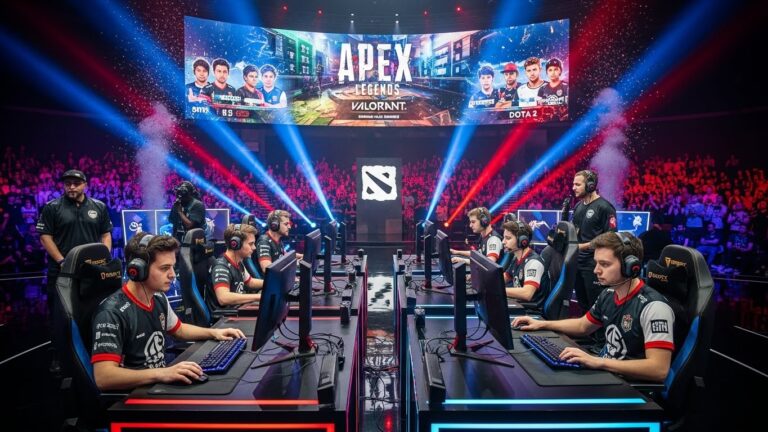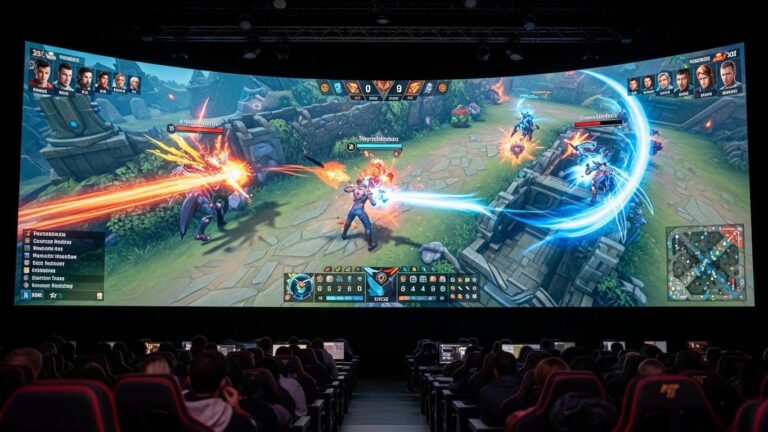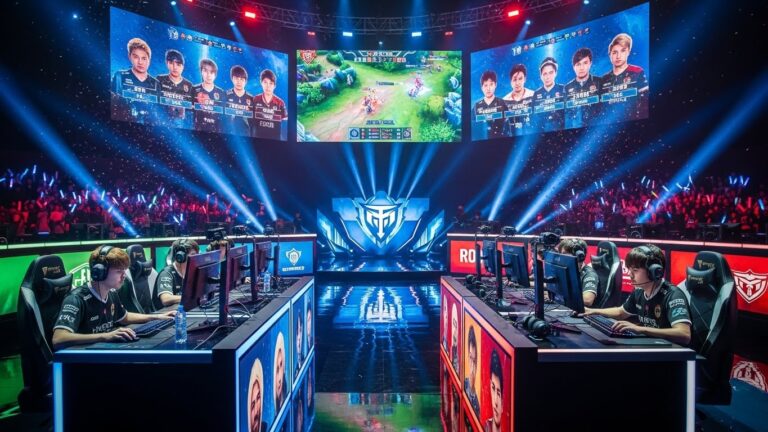

Esports, or electronic sports, has become one of the most significant and rapidly growing industries in the world today. What started as a niche hobby for a small group of video game enthusiasts has now blossomed into a multi-billion-dollar global industry. Competitive gaming, once relegated to obscure tournaments and basement LAN parties, is now televised, streamed live to millions of fans, and even featured in some of the world’s most prestigious venues. From massive international tournaments to mainstream media coverage, esports has captured the imagination of players, fans, and investors alike. But what exactly is esports, how has it evolved over the years, and what does the future hold for competitive gaming?
What is Esports?
At its core, esports refers to organized, multiplayer video game competitions, often between professional players, teams, or organizations. These competitions typically involve high-level gameplay in various gaming genres such as first-person shooters (FPS), multiplayer online battle arenas (MOBA), real-time strategy (RTS), and battle royale games. Unlike casual gaming, esports involves a competitive structure, with players and teams battling for cash prizes, sponsorships, and glory in tournaments that attract thousands of fans, both in-person and online.
The esports industry is built on several pillars, including professional players, teams, organizers, developers, sponsors, broadcasters, and fans. It operates in a manner similar to traditional sports leagues, with competitions ranging from local tournaments to international championships. Esports covers a broad spectrum of games, with the most popular titles being League of Legends, Dota 2, Counter-Strike: Global Offensive, Overwatch, Fortnite, and Call of Duty. These games not only offer exciting gameplay but also attract millions of viewers and generate significant revenue through streaming platforms, sponsorships, and media rights.
The Evolution of Esports: From Niche to Mainstream
Esports has a rich history that dates back to the early days of competitive gaming. In the 1970s and 1980s, the first competitive video game tournaments were organized for games like Pong and Space Invaders. However, it wasn’t until the rise of personal computers and the internet in the 1990s that esports began to gain momentum. Games such as Warcraft, Starcraft, and Quake were among the first to offer online multiplayer modes, laying the foundation for the esports scene.
In the early 2000s, competitive gaming began to take shape with the development of more organized tournaments and leagues. One of the most significant milestones in esports history came in 2002 with the launch of World Cyber Games, which became one of the first global competitions for professional gamers. The success of Starcraft tournaments, followed by the rise of Counter-Strike and Warcraft III, further solidified esports as a serious form of competition.
The real breakthrough for esports came in 2011 with the launch of Twitch, a live-streaming platform dedicated to video games. Twitch revolutionized the way gamers interacted with their audience, offering a platform for professional gamers to broadcast their gameplay live to a global audience. The rise of Twitch allowed esports tournaments to be streamed in real-time, creating a huge fanbase and enabling gamers to build careers from streaming. Over the next few years, major sponsorship deals, prize pools, and media rights deals were established, which pushed esports into the mainstream. With the launch of high-profile tournaments such as the League of Legends World Championship and The International for Dota 2, esports began attracting millions of viewers, some of whom tuned in to watch the tournaments live in stadiums or via online streaming platforms.
The Mechanics of Esports: Games and Formats
Esports spans multiple gaming genres, each with its own unique gameplay mechanics and competition formats. Let’s take a closer look at some of the most popular types of games that define the esports landscape.
1. First-Person Shooters (FPS)
First-person shooters (FPS) are one of the most popular genres in esports. Games like Counter-Strike: Global Offensive (CS:GO), Overwatch, and Call of Duty have garnered massive followings, with esports tournaments offering multi-million-dollar prize pools. FPS games typically focus on combat, where players use a variety of weapons to eliminate opponents and complete objectives. Success in these games requires a combination of quick reflexes, sharp aiming, and strategic team coordination.
In games like CS:GO, two teams of five players face off against each other in a series of rounds, where one team attempts to plant a bomb while the other defends against them. This requires careful planning, communication, and coordination. The competitive nature of FPS games has made them staples in esports, attracting both professional players and dedicated fans.
2. Multiplayer Online Battle Arenas (MOBA)
Multiplayer Online Battle Arenas (MOBA) have taken the esports world by storm, with League of Legends (LoL) and Dota 2 being the undisputed kings of the genre. In these games, players control powerful heroes or champions with unique abilities, and the objective is to destroy the enemy team’s base while defending their own. MOBAs require a high degree of strategy, teamwork, and coordination, as players must work together to outsmart and outplay their opponents.
The League of Legends World Championship and The International for Dota 2 are some of the most watched esports events globally, drawing millions of viewers each year. The prize pools for these tournaments often exceed tens of millions of dollars, attracting top-tier professional teams from all over the world.
3. Real-Time Strategy (RTS)
Real-time strategy games, while not as popular as FPS and MOBA games in modern esports, still hold a special place in competitive gaming. StarCraft and StarCraft II are the most well-known games in this genre. In RTS games, players control armies and manage resources in real time to outmaneuver and outthink their opponents. Unlike other genres, RTS requires players to think many steps ahead, making critical decisions about resource allocation, base-building, and troop movement.
StarCraft II has been a staple in competitive gaming, particularly in South Korea, where it has maintained a dedicated following since its release in 2010. Although the RTS genre has seen a decline in mainstream popularity, StarCraft remains an important part of esports history.
4. Battle Royale Games
The rise of battle royale games such as Fortnite, PlayerUnknown’s Battlegrounds (PUBG), and Apex Legends has introduced a new type of competition in esports. In these games, players are dropped into large, open maps where they must fight to be the last player or team standing. The genre gained massive popularity due to its fast-paced, high-stakes nature and the thrill of survival. These games often combine elements of strategy, combat, and resource management.
Fortnite has become a cultural phenomenon, with competitive tournaments offering millions of dollars in prize money. The Fortnite World Cup, for example, drew in over 2 million live viewers and offered a $30 million prize pool. Battle royale games have attracted a younger, more diverse audience to esports, making it one of the fastest-growing genres in competitive gaming.
The Role of Streaming and Social Media in Esports
One of the driving forces behind the explosive growth of esports is the rise of streaming platforms like Twitch, YouTube Gaming, and Facebook Gaming. These platforms allow gamers to stream their gameplay live, interact with viewers through live chat, and build loyal fanbases. For professional esports players, streaming has become a primary source of income, as viewers can donate money, subscribe to channels, or purchase in-game items to support their favorite streamers.
Streaming has not only made esports more accessible but has also increased fan engagement. Viewers can watch live tournaments, follow their favorite teams, and participate in real-time conversations during gameplay. This has fostered a unique community-driven culture where fans can directly interact with the players they admire.
Social media platforms like Twitter, Instagram, and TikTok have also played a key role in boosting the popularity of esports. Teams and players use these platforms to promote events, share behind-the-scenes content, and interact with their followers. This has helped esports reach a wider audience, particularly younger demographics who are more likely to consume content on social media.
The Business of Esports
Esports is not just a hobby for players; it has become a thriving industry that generates billions of dollars in revenue. This revenue comes from a variety of sources, including sponsorships, media rights, ticket sales, merchandise, and advertising. Major brands from outside the gaming world, such as Coca-Cola, Intel, Red Bull, and Nike, have invested heavily in esports, partnering with teams and tournaments to gain access to the growing gaming audience.
One of the most significant revenue streams for esports comes from sponsorships. Companies sponsor esports teams, players, and tournaments in exchange for advertising opportunities, product placements, and brand exposure. The increased visibility of esports in mainstream media has attracted even more sponsorship deals, contributing to the industry’s growth.
In addition to sponsorships, esports organizations and tournament organizers make significant revenue from media rights. Broadcasting deals with platforms like Twitch and YouTube allow these companies to monetize live streams of tournaments and events. Media rights deals have become a central part of the esports ecosystem, and the industry continues to see record-breaking figures in this area.
The Future of Esports: Global Growth and New Opportunities
The future of esports looks bright, with the industry expected to continue its rapid growth in the coming years. As gaming technology continues to evolve, esports will likely become even more immersive and interactive. Virtual reality (VR) and augmented reality (AR) could play a significant role in shaping the next generation of esports, offering new opportunities for players and fans alike.
Esports is also expanding into new regions of the world, particularly in Asia, Latin America, and Africa, where gaming cultures are growing rapidly. As esports continues to spread globally, more countries will host their own tournaments and leagues, further fueling the industry’s expansion.
The rise of college esports programs and high school leagues indicates that esports will continue to be a viable career path for young players in the future. With educational institutions offering scholarships and training programs, aspiring professional gamers can now pursue esports as a full-time career from an early age.
In conclusion, esports has come a long way from its humble beginnings as a niche hobby. Today, it is a global powerhouse in the entertainment industry, with millions of fans, players, and stakeholders invested in its future. As the industry continues to evolve, esports will likely play a central role in shaping the future of gaming, entertainment, and competitive sports. For players, fans, and investors alike, the journey has just begun, and the best is yet to come.
About the Author